Darkness into Light – a Deeper Phenomenon

There have been many ancient traditions that celebrated the yearly transition from darkness into light. After December 21, the daylight begins to increase, causing mankind to rejoice at this pivitol time. But is there a deeper reality beyond the courses of earth and sun which established the celebration of darkness to light?

While you contemplate, see here what the early speakers of our English language wrote so long ago and compare the change in the way they have expressed themselves over hundreds of years in the gospel of John.

MODERN ENGLISH

In the beginning was the Word, and the Word was with God, and the Word was God.  He was with God in the beginning. Through Him all things were made; without Him nothing was made that has been made. In Him was life, and that life was the light of all mankind. The light shines in the darkness, and the darkness has not overcome it.

OLD ENGLISH

On anginne ærest wæs word. & þæt word wæs mid gode. & god wæs þt word.
þæt wæs on fruman mid gode. ealle þyng wæren ge-worhte þurh hyne. & nan þyng næs ge-worht butan hym. þæt wæs lyf þe on hym ge-worht wæs. & þt lyf wæs manne leoht. & þæt leoht lyhte on þeostrum. & þeostreo þæt ne ge-namen.

MIDDLE ENGLISH

In the bigynnyng was the Word and the Word was at God and God was the Word. This was in the bigynnyng at God. All thingis weren maad bi Hym and withouten Hym was maad no thing that was maad. In Hym was liif and the liif was the liyt of men; and the liyt schyneth in the derknessis. And derknessis comprehenddiden not it.

Hear the Old English https://www.google.com/search?q=in+the+beginning+was+the+word+in+Old+English&rlz=1C1UEAD_enUS1097US1097&oq=in+the+beginning+was+the+word+in+Old+English&gs_lcrp=EgZjaHJvbWUyBggAEEUYOTIHCAEQIRigATIHCAIQIRigATIHCAMQIRigATIHCAQQIRigATIHCAUQIRigAdIBCTIzODE3ajBqN6gCALACAA&sourceid=chrome&ie=UTF-8#fpstate=ive&vld=cid:bf987f25,vid:Mu2AKjMMAXM,st:0

Hear the Middle Englishhttps://www.youtube.com/watch?v=R8pqljv81cI&t=104s

Middle English speech developed over time after the Norman invasion of 1066. The subjugated Anglo Saxons, who spoke Old English, mingled and intermarried with their conquerors and in so doing, added “French” and Latin words into the English language. Middle English developed into Early Modern English, the language of Shakespeare. Glæd Ġēol Eallum!
Despicable “Me”

“Say what?”

I’m here to stand up for the little guy. Poor “me“! In contemporary speech, this first person objective pronoun is often left out, cast off, and upstaged in current everyday American speech.

Today in any typical conversation, one is apt to hear statements like, “Give the money to Jason and I.”, or “That’s the best choice for my husband and I.”, or perhaps, “The cat really likes Lukas and I.” Or whatever combination of possibilities may exist without the dreaded “me”.

All of the above sentences are gramatically incorrect. If you removed “Jason”, “husband”, and Lukas. you would be saying “Give the money to I”. “That’s the best choice for I”, and “The cat really likes I.” These sentences are not grammatical. They sound “funny”. If you spoke these sentences, people would give you a quizzical look with a, “say what?” response.

The correct pronoun in these sentences would be “me” because it is the object of the action in the statement – after a verb or after a preposition. But often people substitute “me” for “I”. So why do we avoid “me”? If you ask the average speaker why they think that is, they are likely to say that people don’t know which pronoun to use.

But I maintain that there is a deeper reason to drop “me” and it reveals a current state of mind in our culture. The answer is simple. Because it sounds common. If we use “me”, we have an uneasy feeling that we are unrefined, ignorant. There’s an unspoken code that says “I” is formal, delicate, not heavy. We don’t dare to sound uneducated when we are unsure which pronoun to use. We think of “me” as the supervillain. Run away in terror. But he’s really our friend. Where did the little guy come from anyway?

Modern English is developed from Early Modern English (1500 – 1700), Middle English (1100 – 1500) and Old English (5th century – 1100). Old English was part of the West Germanic branch of the Indo European language which originated in eastern Europe and Asia. “Almost half of all people in the world today speak an Indo-European language, one whose origins go back thousands of years to a single mother tongue. Languages as different as English, Russian, Hindustani, Latin and Sanskrit can all be traced back to this ancestral language.” 1

The West Germanic Old English language gave rise to what is now contemporary English and we can see the roots of many familar words in that ancient tongue. The bread and butter, meat and potato words of English include prepositions, conjunctions and pronouns. Scientists at the University of Reading have discovered that ‘I’, ‘we’, ‘who’ and the numbers ‘1’, ‘2’ and ‘3’ are amongst the oldest words, not only in English, but across all Indo-European languages. 2

What did “me” look like back in the 5th century? In the singular, involving one individual, “me” is a first person pronoun having to do with self. Second person is the person you are addressing – you. Third person is everyone else – he, she, it.

Singular First person pronouns in Old English were: ich, me, min, me. They were as follows:

Nominative or the Subject of the sentence “I” was ich (sounded like “each”)

Accusative or the Direct Object in the sentence was me (sounded like “may”)

Genetive or Possessive was min (sounded like “mean”)

Dative or Indirect Object was me (sounded like “may”)

Good old “me” – at the ready since the dark ages.

“Me” is helpful. Keeps things clear. Launching the sentence? Nope, taking the hit of the action.

So, let’s put “me” back in circulation like a comfortable, old couch. Afterall, it’s been around for 2,000 years, older than “I”. A trusted companion. And remember, https://youtu.be/0hG-2tQtdlE?si=yHgreU3L3D-C1Ll6

  1. https://knowablemagazine.org/content/article/society/2024/origin-spread-indo-european-lanages
  2. https://www.reading.ac.uk/news-archive/press-releases/pr19825.html

Long Days

Sigh, long days. With the social distancing and quarantines that we experience during this pandemic, the days do seem to get long. For some, this is a welcomed opportunity to catch up on put-off projects or cleaning, for others it seems like there is little to do except clean up the hair all over the floor that you tore out. I just got an email with some clever quips about the current situation. “I wonder if God got so mad about all of our fighting down here that He sent us to our rooms?” or “This is the day dogs have been waiting for. They realize their owners can’t leave the house and they get them 24/7. Dogs are rejoicing everywhere. Cats are contemplating suicide,” or maybe the one that sums it up best – “The truth is, it’s not so boring at home. But it’s interesting that one bag of rice has 7,456 grains and another has 7,489.”

In the midst of this season, some are also experiencing the season of Lent. Lent is the 40 day period in which the church reflects on the time before the death and resurrection of Christ. So recently, I discovered that the word Lent comes from “lencten”,  the Anglo Saxon or Old English term for “long days.” We get the word “lengthen” from it. The Anglo Saxons didn’t have clocks. They observed the obvious. The sun rose earlier and set later in the spring of the year. According to Bede, 8th century historian and scholar, and later Aelfric, Anglo Saxon prose writer, the Anglo Saxons had four seasons: lencten or lenctentid was spring or spring time, sumor was summer, hærfest  was harvest or autumn, and winter remained our word winter. Bede wrote that winter was over for the Anglo Saxon on February 7. On February 7, 2020, the London sunrise was 7:29 am and sunset was 5:01 pm. That doesn’t seem like a real long day. Now, April 1 is a different story. Sunrise was at 6:35 am and sunset at 7:34 pm.  So with 13 hours of light, you could call April 1 a truly long day. So what did these early English speakers do with their “lencten”?

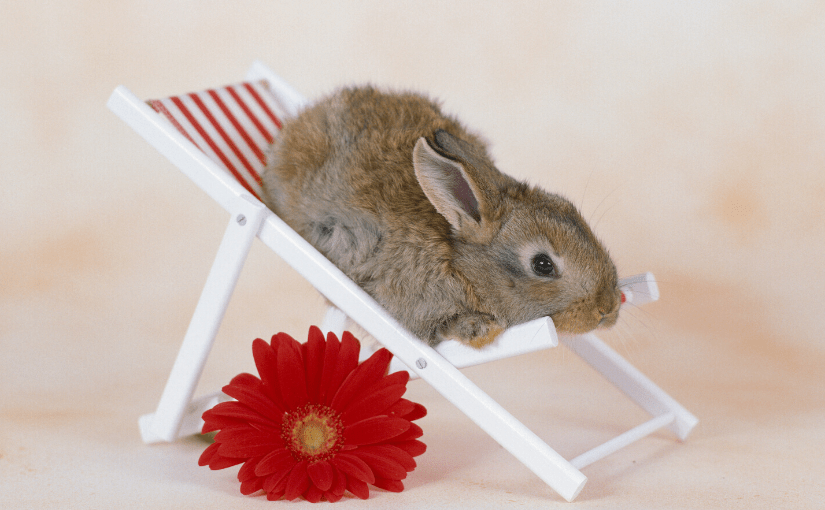
A typical Anglo Saxon’s spring workday would consist of feeding the animals, planting, plowing, and of course eating, all of which needed daylight. There was plenty to keep these people busy attaining their yearly goal of a good harvest. April was called Eostremonath or Eostre month. Eostre, according to Bede, was a pagan goddess of rebirth. Her image is associated with Hares and Eggs, both symbols of new life. The name probably stems from the Germanic Ostara,  from the Greek goddess of dawn, Eos, and ultimately, from a Proto-Indo-European goddess of dawn.

You may have noticed that the name of this goddess sounds an awful lot like Easter. Well, the Christian missionaries didn’t want to abolish all pagan traditions as they shared their new ideas, so they translated the new birth of the earth in the celebration of the spring season into the message of the death and resurrection of Christ. The church kept the pagan name “Easter” for the Sunday celebration. And somehow the little pagan bunnies and eggs of the Eostre celebration, also survived.

After the darkness and cold of winter, April was considered the apex of new life. Not only did the Anglo Saxon peasant have the joy of increased sunlight, but animals usually gave birth at this time. With the warmer days and the first flowers blooming, April has always signaled that the world is changing for the better. Easter is often in April. Scholars have proven through historical record, geological research, and the computer studies of the ancient positions of stars, that Jesus Christ was indeed crucified on April 3, 33 A.D.

So celebrate April! Celebrate the looooong days. Celebrate the light! Things could be worse. You could be an Anglo Saxon with no electricity. Then you would really be enjoying the “lenctenid.”


Sources:

https://oldenglishwordhord.com/2017/02/07

http://research.uvu.edu/mcdonald/anglo-saxon/paganfestivals/Eosturmonath%20Festival.html

Seasons and festivals: Time in Anglo Saxon and Viking England

https://www.mentalfloss.com/article/61127/month-month-guide-anglo-saxon-calendar

Click to access lent.pdf

https://qz.com/1544541/winter-is-over-according-to-the-anglo-saxon-calendar/

https://www.cambridge.org/core/journals/anglo-saxon-england/article/seasons-of-the-year-in-old-english/39241A50CEFF4FB7A63A458FC9D6C3FA

https://www.huffpost.com/entry/jesus-crucifixion-date-possible_n_1546351?guccounter=1&guce_referrer=aHR0cHM6Ly93d3cuZ29vZ2xlLmNvbS8&guce_referrer_sig=AQAAABlo_KKad3kvKem50GQMngbi02ZUaIxwcG4Exsn7H84iKLMd6Y4CZHpYoXnWKM1J1HN7H1dnbnF-U9uT8RF2GihOjHL4ODhX_xPBVT_M77yaA9pLz8h-EHuQK_ZThfrbSyBQWhs9cuPp1eKhdJ8dcD5XcLzab_sWbU6nGQ40lf_W

The Journey Begins

Say what?

A short journey into the history of English…

Hey, what was that you said?

Have you ever wondered, as an English speaker, why you say the words you do? Most people never give it a thought. The words they use are just taken for granted as useful tools for everyday communication. There’s no interest in where these words came from, right?

I say wrong. DNA testing for ancestors is a very hot topic today, and I’m willing to bet that people will not only want to know where they came from, but where their words came from as well. And so I begin this blog.

Influence on Language

If you speak Icelandic, Spanish, or Finnish you are generally using the same words which have been spoken for centuries. You’d say these languages are conservative. Especially if a country is isolated, there is less opportunity for new influences on the language from non native speakers.

But what about English? The roots of the English language are deep and wide and the results are a unique, linguistic flowering, largely due to the influence of invaders. Take a look at England. It’s hardly isolated. In fact, the British Isles have been a target for invaders for thousands of years. Every invader, and eventually settler, contributed to the evolution of the English language.

Anglo Saxon Influence

“But what does this have to do with me?” you may ask. Well, what if you were to say, “Let’s go to your house. I need to get something to eat.” You would be speaking an evolved version of pure Old English, the speech of the Anglo Saxons. Every word in those sentences is from them. Their words are the “meat and potatoes” words, the words that glue our language together. The Anglo Saxons were Germanic raiders that acted and looked a lot like their more famous cousins, the Vikings. They found the island with it’s doors wide open as early as 450 A.D. and walked right in.

Vikings

And speaking of the Vikings, after plundering the British Isles, they eventually settled down and shared their language, Old Norse. If you wanted to choose some words spoken by that tough bunch of dudes, you might say, “Tuesday and Thursday I want to ransack the loft for that skirt!” They showed up in earnest in “Angleland” about 800 A. D.

Norman French

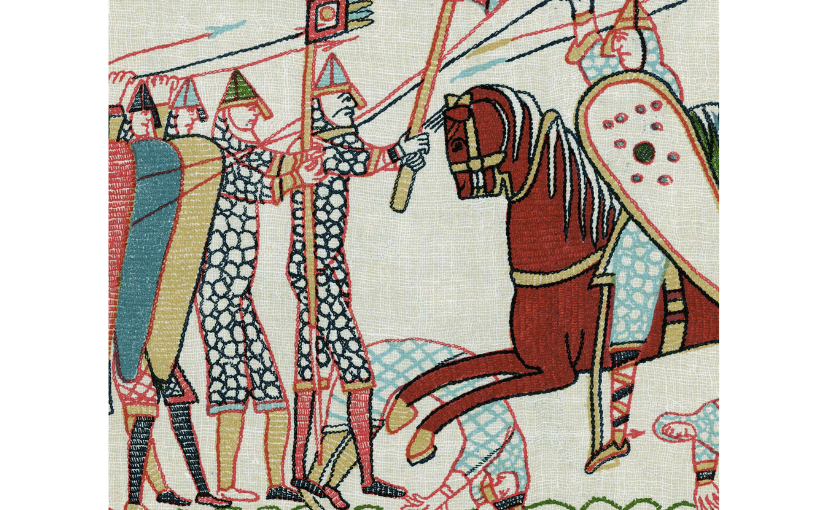
After the second millennium rolled around, we had another batch of bad boys take over and bring their words with them. In 1066, William the Conqueror from Normandy battled Harold and the Anglo Saxon lords at the Battle of Hastings. After they dispatched Harold with an arrow through the eye, they set up their French government and eventually influenced the way their English subjects spoke. Now, remember you wanted to eat at your friend’s house before? Let’s suppose you’re still hungry but don’t want to go to your friend’s house after all. You’ve found out that all he’s got is three day old cheese sticks. You might say, “Let’s rendezvous at the restaurant. I’m famished!” Well, most of that is basically Frenchified Anglo Saxon, which soon after the Norman French takeover would have been dubbed – Middle English.

As English speakers, we have a rich treasure of words at our beck and call. Mmm… and where does that fun, little phrase come from? Stay tuned… there’s another English expression which bears looking into! We will explore more secrets of the English language in upcoming posts.

Mary Atwood, May 2018